

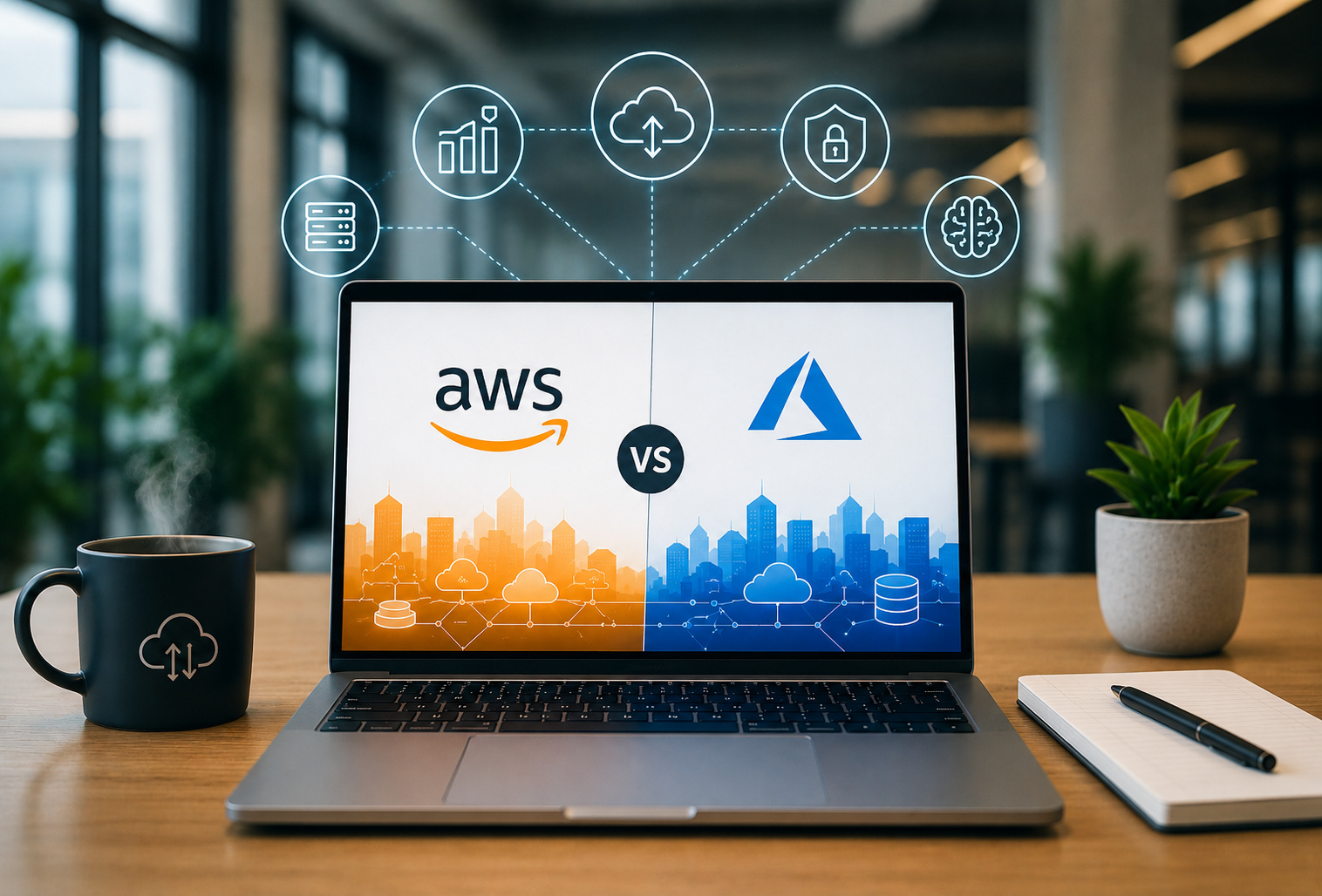
The discussion around the cloud has shifted as well. It revolves around cloud data now. It comes down to how well businesses can manage cloud data and what value they get out of it. Before, the cloud was chosen by organizations because of savings and speed. In 2026, the key element becomes cloud data in action. Organizations will examine cloud data and make decisions based on it. Therefore, cloud data management has become critical. Cloud data management is changing within organizations to make quick decisions and grow. Two leaders rule in that domain: AWS vs Azure. Combined, they account for the largest portion of the cloud market.
But times change. Now, the main topic is cloud data management and quicker analysis. This makes us wonder: Which cloud platform is the best at managing cloud data in 2026? Understanding the Basics of AWS vs AzureBefore we look closer at AWS vs Azure, we need to know what these platforms really do.What is AWS?AWS launched in 2006. It is still one of the best cloud platforms today. It offers a range of services, including storage and compute, as well as analytics, AI, and data lakes. AWS is known for these things: * You can customize the services to fit your needs * It is great for data engineering and analytics workloads * It supports a lot of open-source tools and frameworks * The infrastructure is set up to be available and work well all the time In simple terms, AWS gives you the freedom to build complex and scalable data systems. What is Azure?Azure launched in 2010. It is Microsoft's cloud platform. It helps companies work more effectively by focusing on integration and hybrid capabilities. Many organizations use Azure to move their Microsoft environments to the cloud. Azure stands out for these things: * It works well with Microsoft products like Office 365, Dynamics, and Active Directory * It has hybrid and multi-cloud capabilities * It has built-in security and governance features * It has an analytics system with services like Synapse Analytics and Power BI Azure is perfect for organizations that want a smooth and integrated data environment, especially those that already use Microsoft technologies. Data Explosion: What 2026 Looks Like
Both Azure and AWS have services to handle this amount of data, but they work differently:
This difference is important when comparing AWS and Azure for managing data. Why the AWS vs Azure Debate Is Getting Bigger in 2026The AWS vs Azure comparison is getting more important as companies move to data plans. Nowadays, organisations are:
Might you not know that? Choosing a cloud service is now a big decision that affects how well a company can come up with new ideas to grow and do well for a long time. Top 5 Enterprise Factors in AWS vs Azure Data Platform Evaluation1. Data Storage & Database Services Azure and AWS both provide database and storage services for large workloads. The way they are constructed and how well they function together are different. AWS has: a) Amazon S3 for storing lots of data b) Amazon RDS for managing databases c) Amazon DynamoDB for fast database performance d) Amazon Redshift for analyzing data Azure has: a) Azure Blob Storage for storing lots of data b) Azure SQL Database for managing databases c) Azure Cosmos DB for databases that need to be accessed from places d) Azure Synapse Analytics for analyzing data Performance Insights:
Strategic Insight:
2. AWS vs Azure for Data AnalyticsData analytics is where cloud platforms really show what they can do. AWS Analytics Stack: a) AWS Glue (helps move data). b) Amazon Athena (queries data without a server). c) Amazon Redshift (stores data for analysis). d) Amazon Kinesis (handles streaming data). Azure Analytics Stack: a) Azure Data Factory (makes data pipelines). b) Azure Synapse Analytics (does a lot of analysis). c) Power BI (helps see data). d) Azure Stream Analytics (handles real-time data). Industry Observation:
AWS vs Azure for data analytics – Who Wins?
3. Pricing and Cost EfficiencyCost is a factor when choosing a cloud platform. In terms of cost, both AWS and Azure charge you according to how you utilise their services. Key Differences: a) AWS charges in units, which can be flexible but needs careful management b) Azure offers discounts for using Microsoft products and services Industry Observation:
Startup Perspective:
4. Scalability and PerformanceBoth AWS and Azure are built for environments. They differ in their approach. a) AWS focuses on being cloud mature and widely available b) Azure focuses on scaling with a hybrid cloud Performance Observations :
Strategic Insight:
5. Security and ComplianceSecurity and compliance are key in enterprise cloud strategies. Both AWS and Azure provide: a) Identity and access management b) Encryption for data at rest and in transit c) Global compliance certifications Key Differences:
Industry Observation :
AWS vs Azure Comparison: What Makes Them DifferentWhen comparing AWS and Azure for data analytics, it is clear that they have different approaches:
AWS vs Azure: Where They ExcelThe AWS vs Azure battle can be better understood through the analysis of use cases for each platform in particular industrial sectors. E-commerce & Digital Platforms → AWS is Better AWS is better suited for e-commerce and digital platforms owing to its high elasticity, global scalability, and ability to offer a real-time personalized experience. Banking & Financial Services → Azure is Preferred Due to its superior compliance features and security standards, Azure has been preferred in financial institutions, offering better services such as transaction, security, and compliance reports. Healthcare → Hybrid Approach (AWS & Azure) Most healthcare organizations leverage AWS and Azure. While Azure provides more secure patient-related systems, AWS powers AI and big data projects in healthcare. Media, Entertainment, and Gaming → AWS As far as the media, entertainment, and gaming industries are concerned, AWS excels owing to its high scalability and global network. Manufacturing and Industries → Azure Manufacturing units and industrial operations are best handled using Azure owing to the involvement of the Internet of Things. AWS and Azure: What Are The Strengths And LimitationsHere is a clearer view, let’s look at them side by side: AWS Strengths:
Limitations:
Azure Strengths:
Limitations
Making the Right Choice with the Right PartnerThe AWS vs Azure for data analytics discussion is no longer about choosing the “better” platform. It is about choosing the right platform for your business strategy. Azure offers integration and simplicity. Both are powerful, but success depends on implementation. Concluding Remark: Better results and a higher ROI are attained by companies that match cloud strategy with business objectives. Providing end-to-end data solutions is the main goal at Dream IT Consulting Services. They help organizations: ● Build scalable data architectures Because in 2026, success is not about choosing AWS or Azure - It’s about choosing the right strategy. AWS vs Azure !! Answers to Your Questions
A: AWS data services provide more customization opportunities to users, but Azure data services enable easier management through better system integration.
A: The prices of both are comparable; AWS gives its clients more alternatives, but Azure is more cost-effective for companies that use Microsoft systems. services, providing end-to-end data solutions is the main goal.
A: AWS provides startups with superior scalability options and credits, but Microsoft-based startups should select Azure as their ideal solution.
A: A cloud data platforms comparison shows AWS excels in customization, while Azure leads in integration and usability.
A: AWS leads in global infrastructure, while Azure performs strongly in hybrid and enterprise environments.
A: Both platforms deliver high security protection, but Azure focuses on enterprise-level clients, whereas AWS enables users to manage security details.
A: Yes, many businesses use both platforms in a multi-cloud strategy to combine flexibility and integration. |
Azure vs AWS Comparison for Data Management: Which is Better in 2026?

Share with your community!
BLOGS