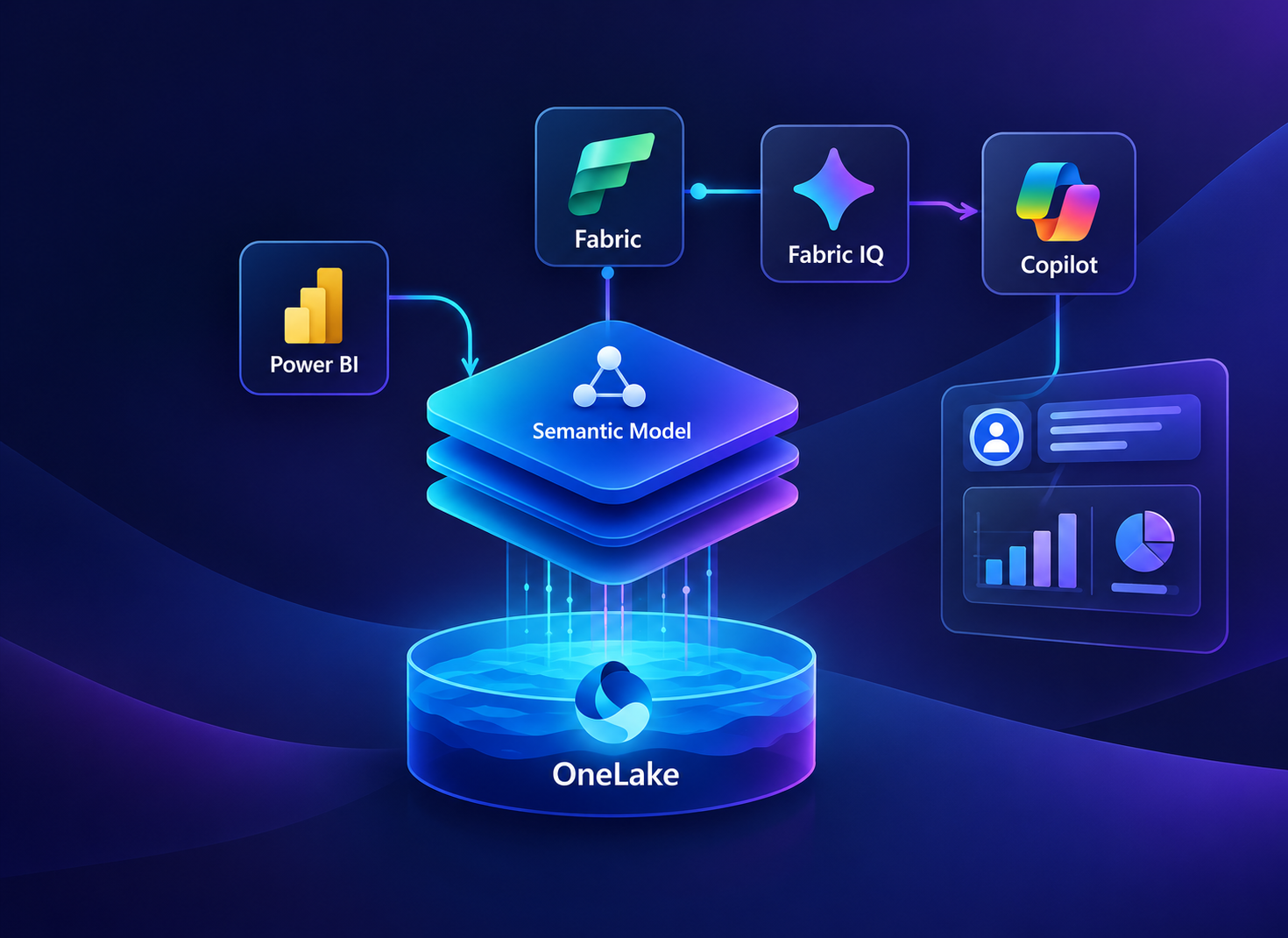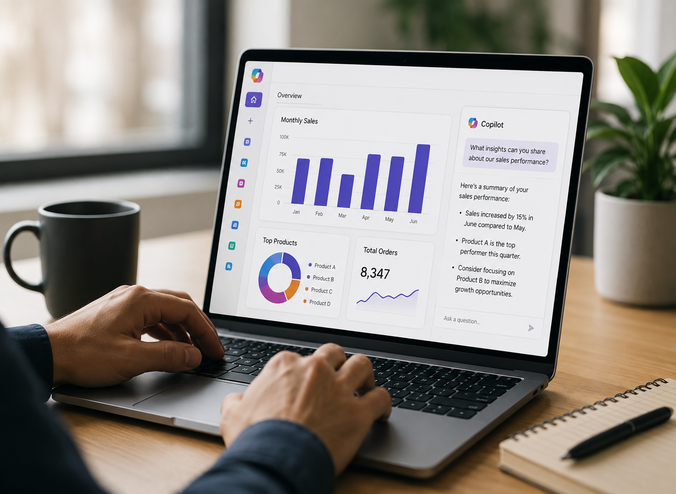

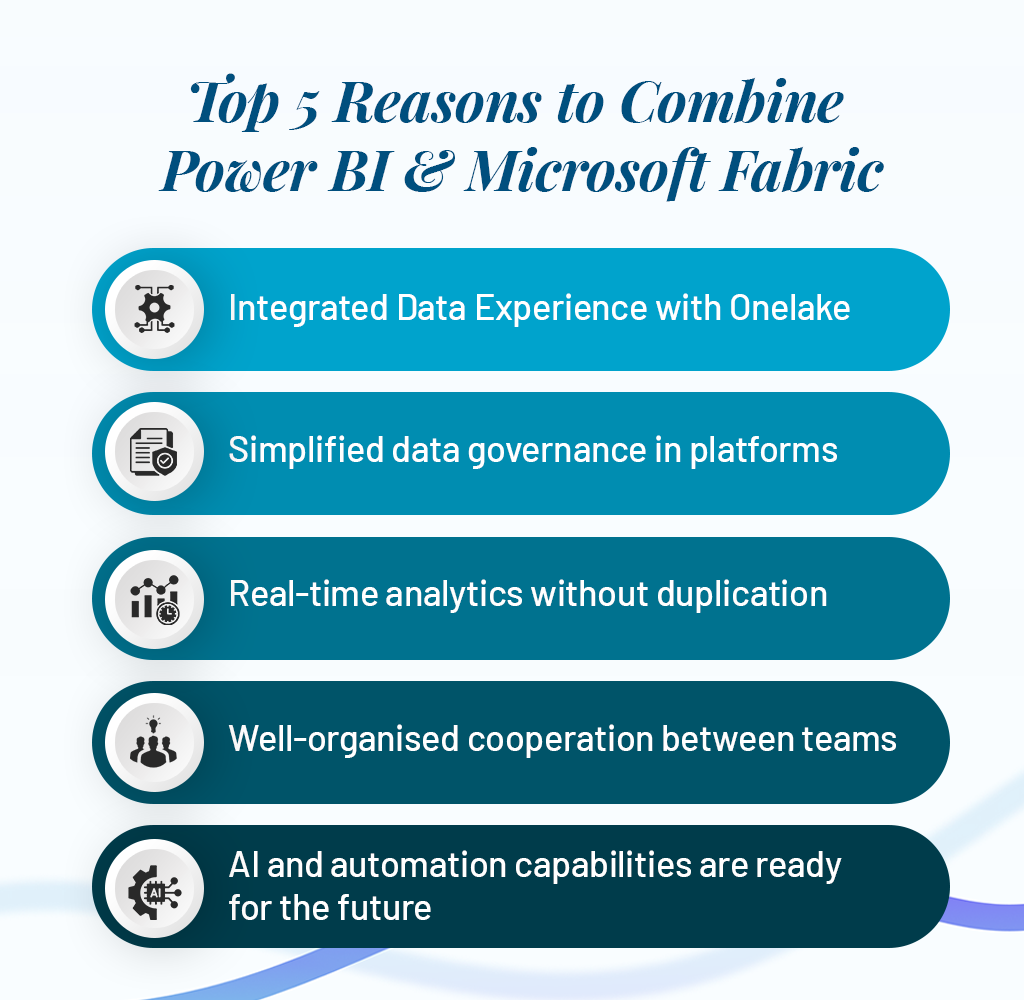
Do you know that the combination of Power BI with Microsoft Fabric is needed by your business analytics stack? In today's data-driven era, success rests on how fast and efficiently businesses turn raw data into actionable insights. Microsoft addresses this requirement with Microsoft Data Fabric-an integrated, end-to-end platform that brings data engineering, data science, warehousing and business intelligence tools together. When the power is integrated with the BI, it unlocks an advanced, streamlined analytics experience that accelerates decision making throughout the organization. Here are five compelling reasons why Microsoft Data Fabric and Power BI integration should be a priority for forward-thinking enterprises. 1. Integrated Data Experience with OnelakeHeritage data systems are fragmented, forcing businesses to use several devices for ingestion, storage, and visualization. It often creates a silo and a delay. Microsoft Data Fabric OneLake introduces a centralized cloud-scale data lake that simplifies access to all organizational data.
Due to the Power BI integration, users can query the data directly in OneLake - no separate ETL pipelines or external connectors are required. This reduces overhead and ensures rapid, more accurate reporting. Key Benefits:
2. Simplified data governance in platformsThe management of data access and policies in the tool can be complex. Microsoft data integrates the Fabric regime at its origin, ensuring that permissions, roles and compliance protocols are continuously applied. With Power BI integration, these rules go automatically into your dashboard. Key Benefits:
3. Real-time analytics without duplicationTraditional analytics rely on the transfer of data to the warehouse, causing delays and errors. Microsoft data provides Fabric DirectLake and DirectQuery - allows live query on operating data. Combined with Power BI integration, it enables an up-to-date dashboard without copying the data. Key Benefits:
4. Well-organised cooperation between teamsMicrosoft Data Fabric unites tools for Fabric engineering, business and analytics teams. Power BI integration allows a shared semantic model, live KPI and colleague dashboard, which removes the requirement of disconnected files or old reports. Key Benefits:
5. AI and automation capabilities are ready for the futureAnalytics is developing from descriptive to predictive. Microsoft Data Fabric AI integrates machine learning and automation, while Power BI adds natural language query and forecasting capabilities. Together, they enable smart decisions with low manual efforts. Key Benefits:
For more information, visit this source: https://www.ilink-digital.com/insights/blog/exploring-microsoft-fabric-and-its-impact-on-power-bi/ Top Questions on Power BI & Microsoft Data FabricQ1: How can Microsoft Data Fabric and Power BI integration benefit small to moderate-sized businesses?A: It helps reduce software complexity and cost by accelerating access to insight through centralised data and a dashboard. Q2: Is Microsoft Migrating to Fabric Complex?A: No. Many companies start with a certified Microsoft Solutions partner, such as Dream IT Consulting Services, for setups, integration and data migration. Q3: Can Power BI without Microsoft Fabric be used?A: Yes, but integration with Fabric increases governance, performance and real-time capabilities. Q4: Which industries benefit the most from this integration?A: All benefits from Power BI integration with areas such as finance, healthcare, logistics, retail, and construction with Microsoft Data Fabric. From data to clarity, with speed and solidarity: Power BI + Fabric for Business Prosperity Microsoft Data Fabric and Power BI integration offer businesses a unique combination of real-time analysis, governance and AI-operated capabilities. Whether you are a small team or a global enterprise, this powerful pair simplifies your data ecosystem and accelerates results. If your goal is fast insight, better cooperation and intelligence ready for the future, then it is time to find out how Microsoft Data Fabric and Power BI integration can change your business analytics stack. |
Top 5 Reasons to Combine Power BI with Microsoft Fabric for Seamless Analytics

Skip to main content
Share with your community!
BLOGS