
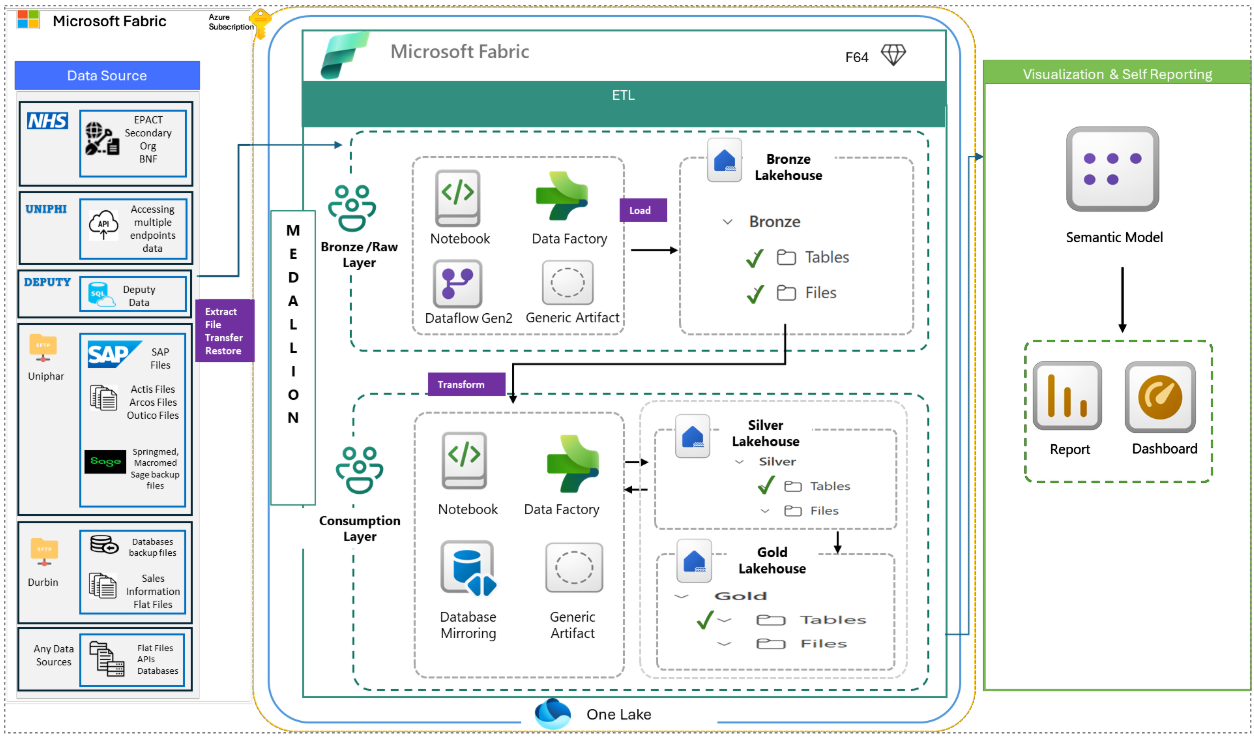
Executive Summary A growing enterprise was operating on a traditional Hadoop-based analytics platform that created frequent downtime, slow Power BI reporting, fragmented data storage, and high maintenance costs. As reporting demands increased, the legacy system became difficult to scale and expensive to manage. We modernized the client’s analytics ecosystem by migrating to Microsoft Fabric OneLake, creating a centralized, cloud-native data platform with automated ingestion, structured Lakehouse architecture, and faster Power BI reporting. Objective The objective of this project is to design and implement a modern, centralized data platform using Microsoft Fabric, replacing the existing traditional Hadoop‑based system. The solution aims to consolidate data from multiple sources, improve data availability through automated batch processing, reduce infrastructure and operational costs, and enable standardized, reliable Power BI reporting for business users. Key Outcomes
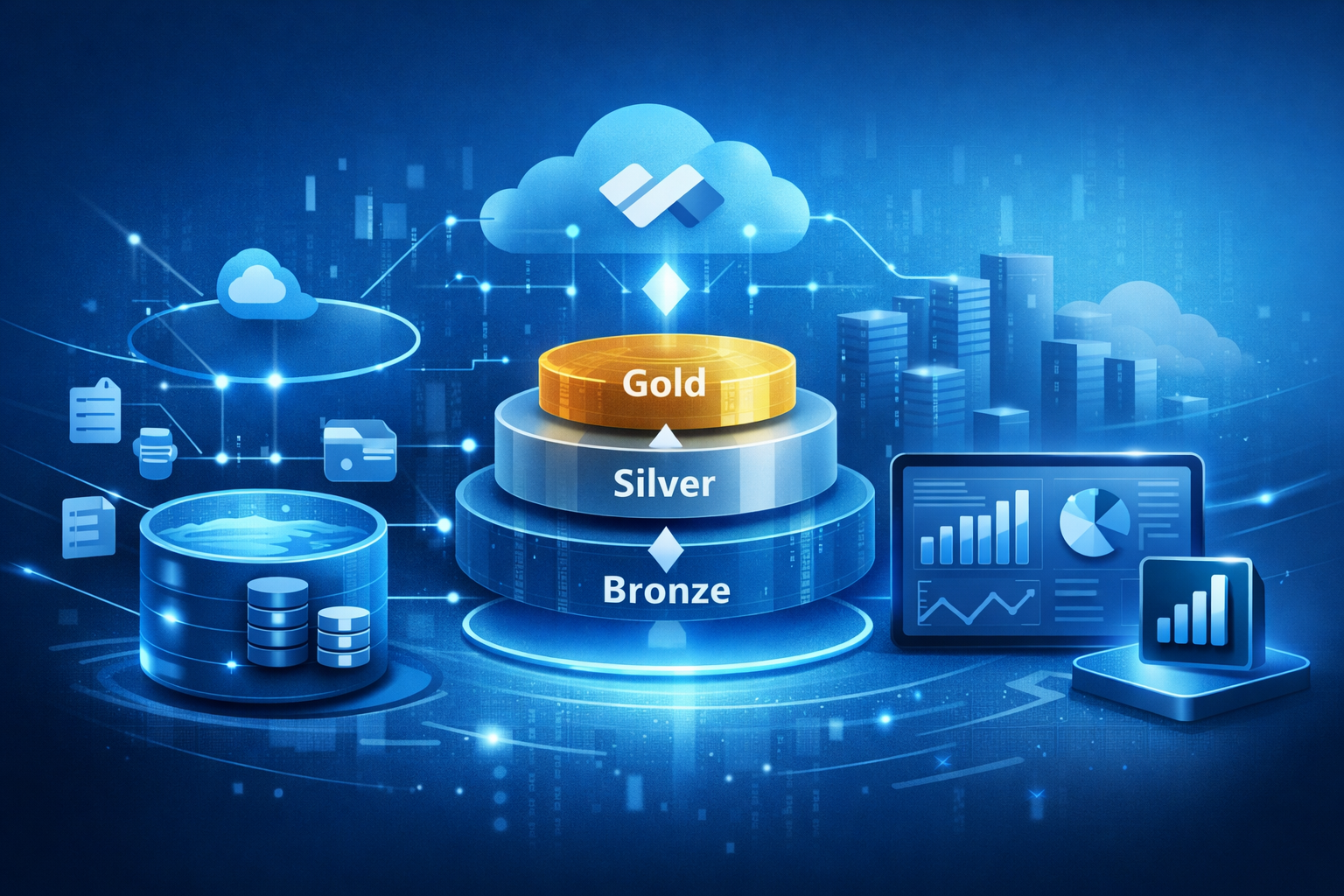
Technology - Why Microsoft Fabric OneLake? Microsoft Fabric was selected because it combines data engineering, storage, pipelines, reporting, and governance into one SaaS platform. 1. Microsoft Fabric : Unified SaaS analytics platform used for data ingestion, processing, storage, and reporting. 2. OneLake : Centralized data lake for storing all enterprise data in a single location. 3. Lakehouse (Bronze, Silver, Gold) : Medallion architecture for raw, refined, and analytics‑ready data. 4. Fabric Data Factory (Pipelines) : Automated batch data ingestion from multiple data sources. 5. Fabric Notebooks (Spark) : Used for data transformation, cleansing, and enrichment. 6. Semantic Model : Business‑friendly data models for reporting. 7. Power BI : Visualization layer for reports and dashboards. Goals 1. Move away from traditional system : Replace the existing Hadoop‑based and third‑party managed platform. 2. Create a single data platform : Bring all business data into one centralized system. 3. Reduce operational dependency : Eliminate heavy maintenance and external support effort. 4. Improve data availability : Ensure data is refreshed regularly and available on time. 5. Simplify data processing : Streamline complex ingestion and transformation processes. 6. Support future growth : Build a scalable platform that can grow with business needs. 7. Enable consistent reporting : Provide trusted and standardized reports to business users. Solution 1. Adopted Microsoft Fabric: Implemented a unified analytics platform to replace the traditional BI setup. 2. Centralized data using OneLake: Stored all enterprise data in a single, shared data lake. 3. Implemented layered data architecture: Used Bronze, Silver, and Gold layers for structured data processing. 4. Automated data ingestion: Built Fabric pipelines to load data from multiple source systems. 5. Simplified data transformation: Used Fabric notebooks and Dataflow Gen2 to clean and refine data. 6. Prepared business‑ready datasets: Created curated data models for reporting and analytics. 7. Enabled smooth Power BI reporting: Although Power BI reports existed earlier, they were slow and unreliable due to server performance issues, frequent downtime, and fragmented data storage. The new Fabric‑based solution reduced operational overhead and ensured reliable, centralized, and standardized datasets for consistent reporting. Pre-Fabric Architecture Overview Before Fabric Implementation: 1. Power BI reports already existed but were slow and unreliable due to server performance limitations. 2. Data was stored across multiple servers and systems, leading to fragmented and inconsistent datasets. 3. Data processing and transformations were handled through server‑hosted Hadoop/Spark environments, increasing dependency on infrastructure availability. 4. Some manual data handling and reconciliation were required due to lack of a centralized platform. 5. Heavy dependency on FastHosts and third‑party vendors for infrastructure management and support. 6. Frequent server downtime or high load caused report refresh failures and reporting delays. 7. Scaling required additional servers and manual configuration, increasing cost and operational effort. 8. High operational overhead for infrastructure monitoring, maintenance, debugging, and issue resolution. 9. Lack of a unified data platform resulted in inconsistent data across reports, impacting trust and usability. Post-Fabric Architecture Overview After Fabric Implementation:
Frequently Asked QuestionsCan Microsoft Fabric replace Hadoop?Yes. Microsoft Fabric can replace many Hadoop workloads using Spark, Lakehouse storage, pipelines, and integrated reporting. What is OneLake used for?OneLake centralizes enterprise data into one governed storage layer for analytics and reporting. Is Microsoft Fabric better for Power BI reporting?Yes. Microsoft Fabric integrates natively with Power BI, helping improve refresh performance, consistency, and scalability. How long does a Hadoop to Fabric migration take?It depends on system complexity, data volume, and integrations. Many migrations are completed in phased stages. |
HEALTHCARE & PHARMACEUTICALS
How We Migrated a Legacy Hadoop Analytics Platform to Microsoft Fabric OneLake

Share with your community!
SUCCESS STORIES